
How Does a Disc Forage Mower Improve Forage Efficiency in Modern Hay Operations?
A disc forage mower is engineered for fast, clean, and consistent cutting in high-volume hay and forage systems. Its structure integrates rotating discs, hardened cutting knives, reinforced gear-driven beds, and optimized flotation systems that allow the machine to maintain precise ground contouring.
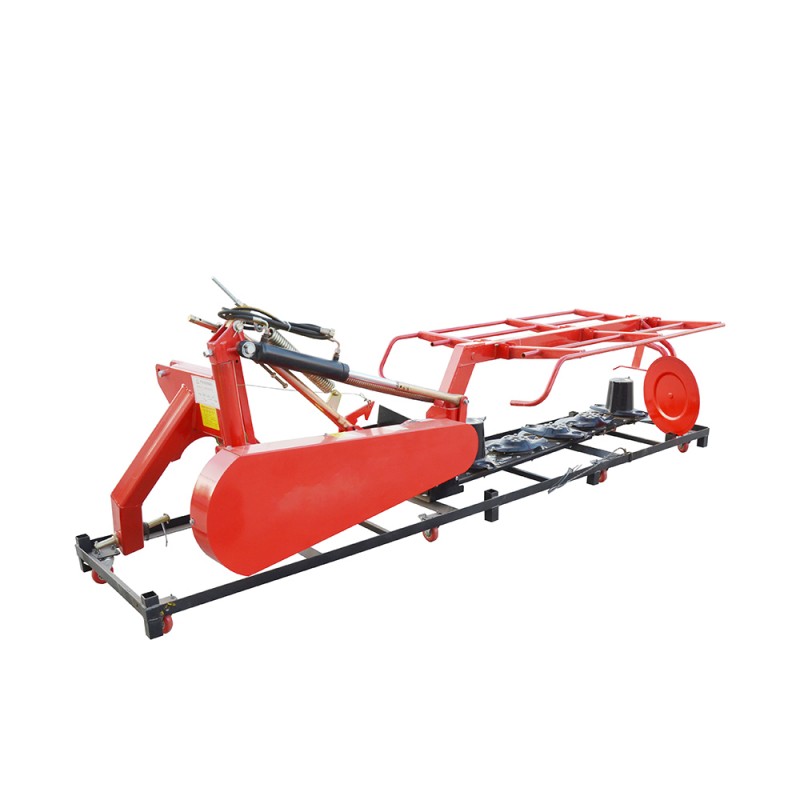
The following specification set represents the standard configuration of Disc Forage Mowers used in mid- to large-scale forage systems:
| Parameter Category | Specification Details |
|---|---|
| Cutting Width Options | 2.0 m – 4.0 m working width, depending on model |
| Cutter Bar Structure | Welded, low-profile gear-driven bar with modular disc stations |
| Disc Rotation Speed | Approx. 3,000 RPM; optimized for dense forage and mixed grass varieties |
| Number of Cutting Discs | 5–8 discs depending on width; replaceable knife sets |
| Knife Material | Heat-treated alloy-steel, reversible double-edge knife design |
| Power Requirement | 40–120 HP depending on model size |
| PTO Compatibility | Standard 540/1000 RPM PTO |
| Safety Protection | Shear-hub disc stations, breakaway release system, belt-drive overload protection |
| Flotation System | Adjustable spring or hydraulic suspension for ground-following precision |
| Swath Formation | Adjustable deflectors for variable windrow width |
| Frame Design | Reinforced steel frame; quick-lift headland control |
| Maintenance Access | Removable service panels; top-access cutter bar |
| Weight Range | 650 kg – 1,200 kg depending on width |
| Attachment Mode | Three-point rear-mount or side-mounted options |
| Operating Speed Capability | 10–18 km/h in suitable field conditions |
How Does Cutting Mechanism Design Affect Forage Quality and Field Throughput?
The cutting mechanism of a disc forage mower significantly influences forage quality, residue uniformity, and the daily field capacity achievable by producers. Fast-rotating discs deliver clean shearing even in wet or lodged grass, avoiding the crop pulling and shattering losses that rotary or sickle systems may encounter. The low-profile cutter bar allows the mower to operate closer to the soil surface without disturbing root crowns or incorporating soil into the swath.
Precision in blade geometry, disc spacing, and the timed rotation pattern contributes directly to improved cutting uniformity. Reversible knife configurations reduce downtime and help operators maintain sharper blades throughout the harvest cycle. The gear-driven cutter bar, built with reinforced modules, distributes torque evenly across disc hubs and reduces vibration during extended operation hours. Together, these characteristics contribute to consistent swath density, more efficient drying windows, and higher overall forage value.
The flotation function also plays an important role. By allowing the mower to float over irregular terrain rather than forcing the cutter bar against the soil, operators achieve cleaner cuts, reduced soil contamination, and lower blade wear. When coupled with adjustable swath guides, this contributes to controlled forage placement suitable for follow-up tedding or baling operations.
How Does Durability Engineering Influence Lifecycle Cost and Performance Stability?
Durability engineering is a primary factor for operators evaluating long-term investment efficiency. Disc forage mowers frequently operate in abrasive, dusty, and moisture-heavy conditions. Therefore, the reinforced frame, sealed gearboxes, and high-impact disc hubs are central elements that determine reliability and maintenance intervals.
Modular cutter bar systems allow individual disc stations to be removed and serviced without dismantling the entire unit. This modularity shortens downtime and reduces service expenses, especially in large commercial operations where time sensitivity is paramount. Shear hubs incorporated into disc drives provide overload safety; they sacrifice the hub rather than the main gear components when encountering unexpected obstacles.
Corrosion-resistant finishes and internal lubrication channels extend service life even under heavy seasonal workloads. Belt-drive systems, where applicable, are engineered to balance torque load distribution across discs, contributing to reduced strain on the gearbox. These design decisions collectively lower lifecycle ownership costs.
Additionally, PTO compatibility ensures seamless integration across a range of tractor models. By supporting both 540 RPM and 1000 RPM PTO input, the mower offers operational flexibility and maintains optimal cutting performance under varied power conditions.
How Are Forage Producers Evaluating Market Trends for Disc Mowers and Field Automation Integration?
Market trends indicate consistent adoption of disc forage mowers in regions where high-volume forage production is critical for dairy, beef, and mixed-livestock systems. Several patterns are shaping purchasing decisions:
-
Demand for higher field output: As labor availability decreases and land use becomes more intensive, producers prioritize equipment capable of faster cutting speeds and wider working widths.
-
Emphasis on feed quality: Disc mowers provide clean cuts that minimize nutrient loss in high-value crops such as alfalfa and mixed pasture grasses.
-
Interest in low-maintenance drive systems: Advances in gearbox sealing, improved lubrication technologies, and modular disc station construction have encouraged buyers to transition away from older sickle-bar systems.
-
Compatibility with emerging automation: Producers increasingly pair disc mowers with precision farming tools. Predictive maintenance sensors, field-mapping integrations, and telematics platforms are influencing equipment selection in commercial markets.
-
Shift toward efficiency sustainability: Reduced fuel consumption, lighter frame materials, and improved gearbed construction contribute to environmentally responsible operations without performance trade-offs.
These trends illustrate a shift toward technologically capable, durability-focused equipment that supports long harvest windows and minimizes operational interruptions.
How Can Operators Maximize Daily Productivity While Maintaining Cutting Consistency?
Operators can optimize daily productivity by adopting field-tested operating strategies along with routine maintenance. Setting the correct flotation tension ensures the cutter bar glides over terrain rather than digging into the ground. Matching tractor PTO output with the mower’s recommended operational band prevents torque loss and maintains disc rotational speed.
Blade sharpness directly affects cutting uniformity. Reversible double-edge knives simplify maintenance and allow operators to maintain optimal cutting performance without extended downtime. Adjusting swath guides to suit moisture levels and follow-up equipment improves drying efficiency and reduces leaf shattering.
Routine field assessments for early identification of wear points—such as gearbed seals, discs, and knife bolts—minimize the risk of unscheduled stoppages during peak harvest windows. Employing consistent headland turning techniques and maintaining steady ground speed reduce stress on the mower’s drivetrain, extending its operational lifespan.
Common Questions About Disc Forage Mowers
Q1: What type of crops are best suited for a disc forage mower?
A1: Disc forage mowers perform effectively in a wide range of forage types including dense grasses, alfalfa, mixed pasture, and lodged or moisture-heavy crops. The fast disc rotation and clean-cutting knife geometry allow the mower to handle both fine-leaf and thick-stemmed plants while minimizing nutrient loss and soil contamination.
Q2: How often should the knives on a disc forage mower be replaced or reversed?
A2: Knife maintenance intervals depend on soil conditions, crop density, and field debris. Under standard conditions, operators often reverse knives every few operational hours to maintain sharpness and replace them after both edges have been used. Frequent inspections ensure that knife bolts remain secure and that blade wear does not compromise cutting quality.
Market Alignment and Contact Invitation
Disc forage mowers continue to play a critical role in professional forage systems by supporting efficient cutting, reduced drying times, and high nutritional retention in harvested crops. As agricultural operations scale and equipment demands intensify, choosing a mower engineered for stable performance, reliable gear-driven operation, and simplified maintenance becomes increasingly important. Harvester provides equipment that aligns with these expectations through rigorous structural engineering and a clear focus on operational reliability in varied field conditions.
For detailed specifications, procurement guidance, or technical consultation, contact us to discuss solutions tailored to your forage production needs.