

What Benefits Can Disc Mower with Conditioner Bring to Your Forage Harvesting Work?
Abstract
Disc Mower with Conditioner is an integrated forage harvesting machine combining cutting and crop conditioning functions. It is engineered for farmers and agricultural contractors who need to cut hay, alfalfa and legume grasses while conditioning stems to speed up field drying. This article covers core working principles, key structural components, usable crop types, field adaptability, maintenance guidance and frequently asked technical points to help overseas agricultural buyers evaluate this tractor-mounted farm implement from Harvester Machinery.
Table of Contents
- 1. What Is Disc Mower with Conditioner and How Does It Work?
- 2. Main Structural Components of Disc Mower with Conditioner
- 3. Core Advantages Compared With Standard Disc Mowers
- 4. Suitable Crops and Field Application Scenarios
- 5. Technical Specifications Reference Table
- 6. Operating Tips for Field Use
- 7. Routine Maintenance and Service Recommendations
- 8. FAQ About Disc Mower with Conditioner
- 9. Get In Touch With Harvester Machinery
1. What Is Disc Mower with Conditioner and How Does It Work?
A Disc Mower with Conditioner is a tractor-attached agricultural implement that completes two operations in one pass: mowing standing forage and conditioning the freshly cut crop. Traditional separate mowing and conditioning require two trips across the field, which consumes more working hours and increases soil compaction risk. This combined machine removes that extra step.
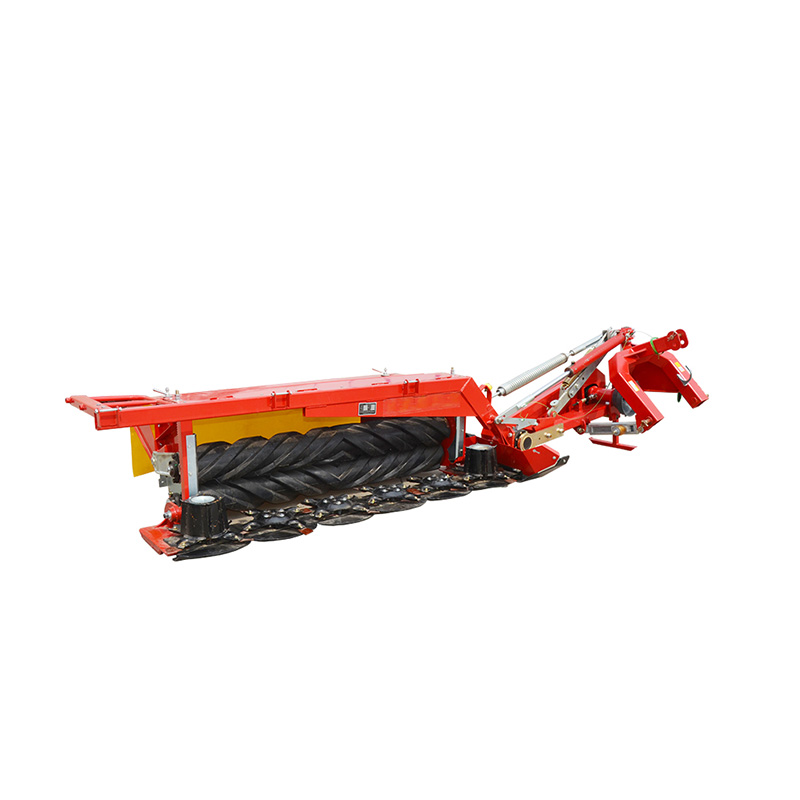
The cutting section uses rotating discs fitted with sharp blades. The discs rotate at 2900RPM, generating airflow that lifts lodged or fallen grass for clean cutting. Immediately after the forage is cut, it passes through herringbone rubber conditioner rollers. These rubber rollers squeeze and crush plant stems without tearing off delicate leaves. Breaking the stem structure releases internal moisture, accelerating natural drying in the field and reducing nutrient loss before baling.
The machine frame uses a floating suspension design. Double spring suspension allows the cutter bar to follow uneven ground contours. When hitting hidden obstacles or sudden force, the unit can swing backward automatically to protect discs, blades and the main gearbox from impact damage.
2. Main Structural Components of Disc Mower with Conditioner
Every functional section works together to deliver reliable cutting and conditioning performance. Below are key assemblies:
Cutter Bar and Disc Cutting Assembly
The cutter bar houses multiple rotating discs with quick-change blades. Each disc spins independently to maintain consistent cutting height. Blades are replaceable when worn, and the disc housing protects internal gearing from dirt and crop debris.
Herringbone Rubber Conditioner Roller Unit
The paired rubber rollers form the conditioning core. The herringbone pattern transfers horizontal and vertical pressure onto crop stems. The rubber material is gentle on alfalfa and clover leaves, unlike steel roller systems which can shatter fragile leaf material. The roller gap can be adjusted to control conditioning intensity for different crop moisture levels.
Frame, Suspension and Hitch Assembly
The three-point hitch connects to standard farm tractors. A spiral handwheel adjusts lifting and lowering. Dual floating springs keep the cutter bar grounded while avoiding digging into soil. Breakaway protection activates under sudden impact to prevent expensive component failure.
PTO Drive and Gearbox System
Power comes from the tractor PTO shaft. The enclosed gearbox transfers rotational power to discs and conditioner rollers. Sealed gearbox construction reduces water and dust ingress for longer service life.
Heavy-duty frame Rubber conditioning rollers Spring floatation PTO driven
3. Core Advantages Compared With Standard Disc Mowers
Many buyers compare standard disc mowers against Disc Mower with Conditioner. The biggest difference lies in the integrated conditioning rollers, bringing multiple practical benefits for forage production.
- Single-pass operation saves field working time and reduces tractor fuel consumption.
- Rubber rollers crush stems to speed up drying time, shortening the window between cutting and baling.
- Protects leaf portions of legume crops to preserve feed protein content.
- Disc airflow design picks up lodged grass that plain mowers often leave uncut.
- Ground-following suspension reduces scalping and preserves grass root systems for regrowth.
- Compact working width options match small and medium-sized farm plots.
- Robust breakaway mechanism lowers repair costs caused by rocks and buried field debris.
For operations focused on hay and alfalfa quality, faster drying reduces risks of rain damage during curing. Wet forage left in swaths can develop mold, which ruins feed quality and creates health risks for livestock. Conditioning helps reach safe moisture levels faster, especially in humid climates.
4. Suitable Crops and Field Application Scenarios
This machine targets forage producers working with leafy hay crops. It performs best on the following plant types:
- Alfalfa
- Clover
- Timothy grass
- Orchard grass
- Other legume and mixed pasture grasses
Farm Operation Types
Small family farms, medium scale hay operations and agricultural contractors can adopt this implement. It fits fields with moderate undulations. The floating suspension handles gentle slopes and minor ground irregularities. For extremely rocky fields, operators need to reduce ground speed and inspect the field before mowing.
It is not recommended for thick woody weeds or very tall, coarse stalk crops such as mature sorghum without proper model selection. Leafy crops remain the ideal application to maximize the rubber conditioner roller benefits.
5. Technical Specifications Reference Table
| Item | Parameter |
|---|---|
| Cutting Disc Rotation Speed | 2900 RPM |
| Conditioner Roller Type | Herringbone rubber rollers |
| Power Source | Tractor PTO drive |
| Hitch Type | 3-point tractor hitch |
| Suspension | Dual spring floating system |
| Protection System | Breakaway backward swing for obstacle avoidance |
| Target Crop | Alfalfa, clover, pasture grasses |
Multiple working width versions are available. Different model sizes match different tractor power ranges. Contact Harvester Machinery to get exact dimension data for your target model.
6. Operating Tips for Field Use
Correct setup directly impacts cutting cleanliness, conditioning effect and equipment lifespan. Follow these practical steps before and during mowing work:
- Inspect all blades, roller surfaces and PTO driveline before entering the field. Replace bent or dull blades.
- Adjust the cutterbar height to leave proper stubble for crop regrowth; avoid cutting too low into soil.
- Set roller gap according to crop thickness and moisture. Narrower gaps create stronger conditioning for thick stems.
- Match forward speed to crop density. Heavy standing grass requires reduced travel speed to prevent clogging.
- Check swath formation after the first pass to confirm the conditioned crop lays evenly for drying.
- Clean plant residues from rollers and disc housing after finishing each field to avoid buildup.
Operators must read the full operation manual before starting work. Safety shields should stay mounted during all operation. Never perform maintenance while the tractor engine and PTO are running.
7. Routine Maintenance and Service Recommendations
Regular maintenance keeps Disc Mower with Conditioner in stable working condition year after year. Maintenance can be separated into daily checks, seasonal service and long-term storage care.
Daily Pre-operation Inspection
Check for loose bolts, damaged rubber rollers and blade wear. Look for oil leaks around gearbox and bearing housings. Confirm safety guards are securely fastened.
Seasonal Service
At the end of each harvest season, drain and replace gearbox oil as specified. Examine roller rubber surfaces for cracks or deep abrasion. Replace worn rubber rollers before the next hay cutting season. Lubricate all grease points on hitch, pivot joints and driveline.
Long Term Storage
Clean all crop debris completely. Store the machine in dry covered space. Relieve spring tension if storing for many months. Protect rubber rollers from direct sunlight to slow rubber aging.
8. FAQ About Disc Mower with Conditioner
Will Disc Mower with Conditioner damage alfalfa leaves?
When properly adjusted, the herringbone rubber rollers crush stems while preserving leaves. Steel roller conditioners apply heavier compression and may break more leaves. Rubber roller models are preferred for alfalfa and clover because leaf retention maintains higher feed nutrition.
What tractor power is required to operate this machine?
Required tractor horsepower depends on the selected working width. Smaller models fit compact tractors, while wider cutting versions need higher power tractors. Harvester Machinery sales team can recommend suitable tractor matching according to your field size and crop type.
Can the machine work on sloped fields?
Moderate slopes are acceptable thanks to floating spring suspension. Extremely steep terrain increases rollover risk and reduces cutter bar stability. Always follow tractor safety guidelines on hillsides.
Is spare parts support available for overseas buyers?
Harvester Machinery supplies replacement blades, rubber rollers, seals and gear components. OEM and ODM services are available for bulk buyers. Reach out to the team to confirm spare part delivery options for your region.
9. Get In Touch With Harvester Machinery
Harvester Machinery is a professional agricultural machinery manufacturer with years of experience producing Disc Mower with Conditioner and other farm harvesting equipment. The factory owns multiple production lines and passes ISO and CE certification. OEM and ODM customization services are available for global wholesale buyers.
You can learn more about the company background on About Us page. If you have technical questions, model inquiries or want to request product documentation, submit your message via our Contact Us page. All inquiries will receive a reply within 24 working hours.
Ready to Learn More About Disc Mower with Conditioner?
Request detailed product brochures, technical datasheets and reference case information for your farm or agricultural contracting business.
Contact Our Team